
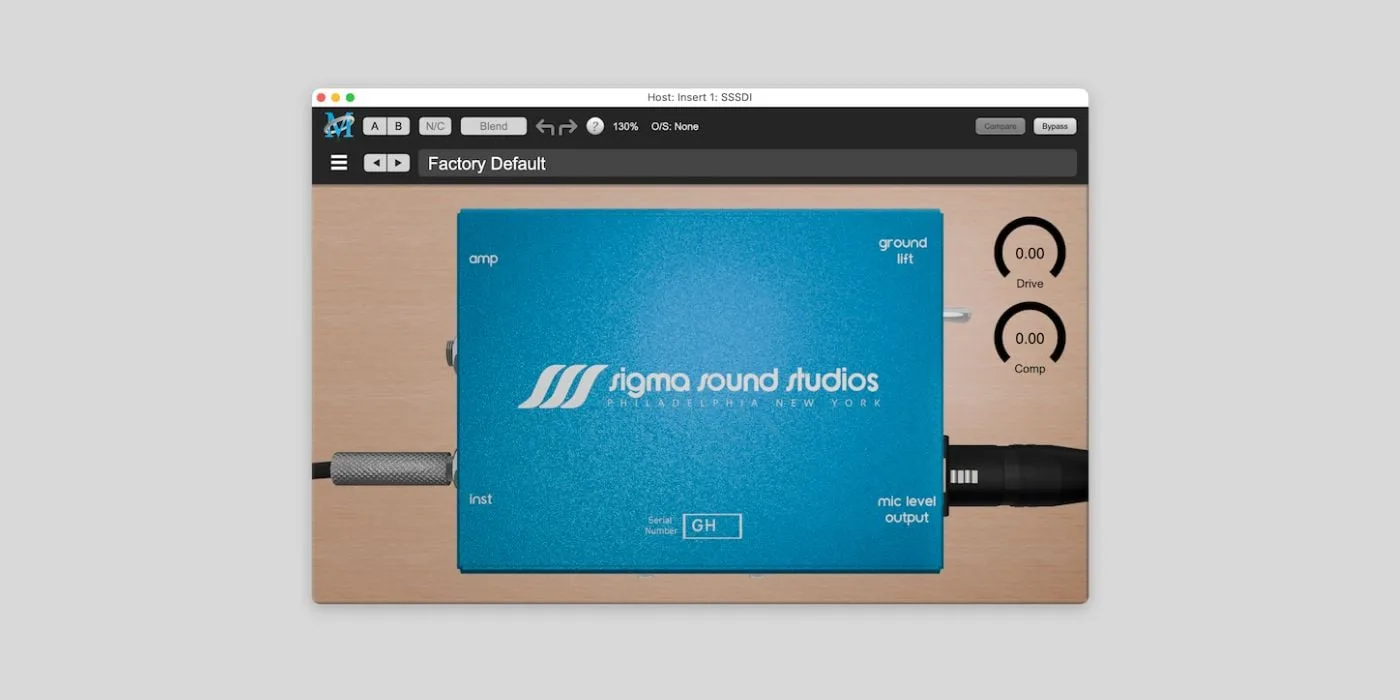
Philly DI
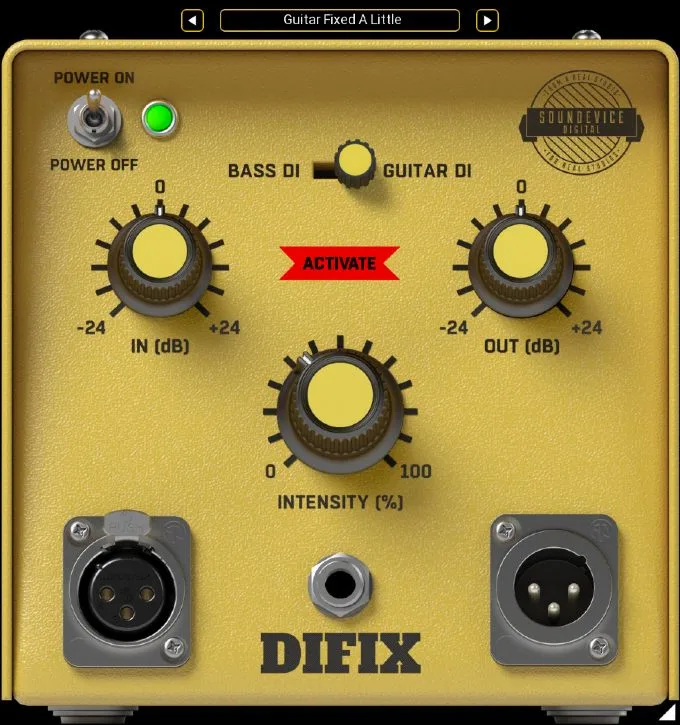
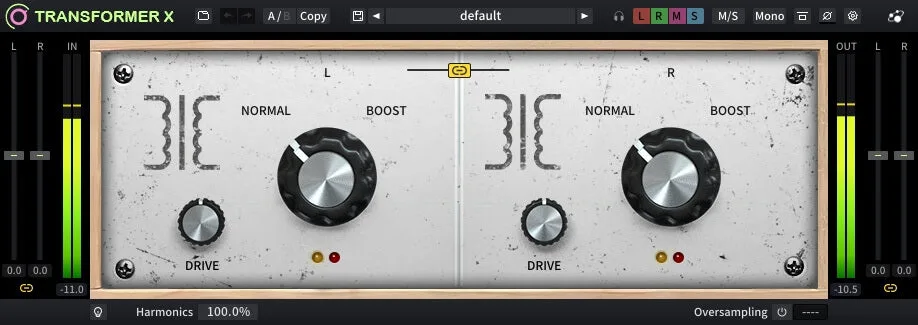
Key Features
- Emulates the transformer character of the Sigma Sound Studios DI box
- Level-compensated Drive control for pushing the modeled transformer harder without simple volume matching guesswork
- Integrated compressor inspired by the Sigma Sound Studios recording chain
- Presets included for faster setup on bass, guitar, keyboards, and other direct sources
- MH Preset Manager support for moving presets across supported plugin formats
- Native plugin support across macOS and Windows hosts
Description
Philly DI is a direct-box emulation plugin from Make Believe Studios and Metric Halo, modeled after the custom Sigma Sound Studios DI associated with Joe Tarsia's Philadelphia and New York rooms. It is built for adding transformer color, level-compensated drive, and a Sigma-style recording-chain feel to direct bass, guitar, and keyboard tracks.
The plugin keeps the workflow intentionally simple: drive controls how hard the signal hits the modeled transformer, while the built-in compressor mirrors the signal chain used at Sigma Sound Studios. The official page also includes presets and Make Believe's cross-platform preset manager, so it can move between supported systems without rebuilding settings from scratch.
The sound is more about old-school presence and weight than obvious special effects. Source testing notes that the clean setting can be very subtle, but pushing Drive and Comp brings out more low-end saturation, grit, and vintage DI character on instruments that need to sit forward without turning into an amp simulation.
Philly DI is best treated as the first tone-shaping insert on a direct instrument track. Put it before amp sims, pedals, EQ, or compression when the goal is to give a plain interface recording more transformer-like body before the rest of the mix chain reacts to it.
Video Preview

Frequently Asked Questions
What hardware is Philly DI based on?
Philly DI is based on the Sigma Sound Studios DI, a rare custom direct box associated with Sigma founder Joe Tarsia. Make Believe Studios says the plugin was modeled from a pristine original hardware unit provided by George Hajioannou of Studio Logic Sound.
Why does the plugin include both Drive and Comp controls?
The Drive control changes how hard the signal hits the modeled transformer. The compressor is included to approximate the broader Sigma recording-chain behavior rather than only the DI box in isolation.
Is Philly DI supposed to sound dramatic in clean mode?
Not necessarily. BPB's testing notes that the clean setting can be extremely subtle, while Drive and Comp make the effect more obvious by adding saturation, grit, and vintage direct-injection color.
Does Philly DI require a paid license manager?
The official page lists the licensing requirement as none and says the plugin is free. Access is handled through a Metric Halo / Make Believe mailing-list signup that sends a personalized download link.


