RVRSE

Key Features
- Turns any compatible one-shot sample into a tempo-synced reverse reverb riser and impact instead of making you bounce and reverse audio manually
- Riser Length control covers short quarter-beat pickups through full 16-beat builds for drops, fills, and breakdown transitions
- Lush, Fade In, Riser Volume, and Hit Volume controls make it easy to shape how dense the swell feels and how hard the final hit lands
- Built-in stutter section adds rate and depth controls for more rhythmic, EDM-style motion before the riser resolves
- MIT-licensed open-source codebase makes the plugin unusually transparent and hackable compared with most niche transition tools
- Current v1.0.0 release includes macOS and Windows binaries with VST3, AU, CLAP, and standalone builds
Description
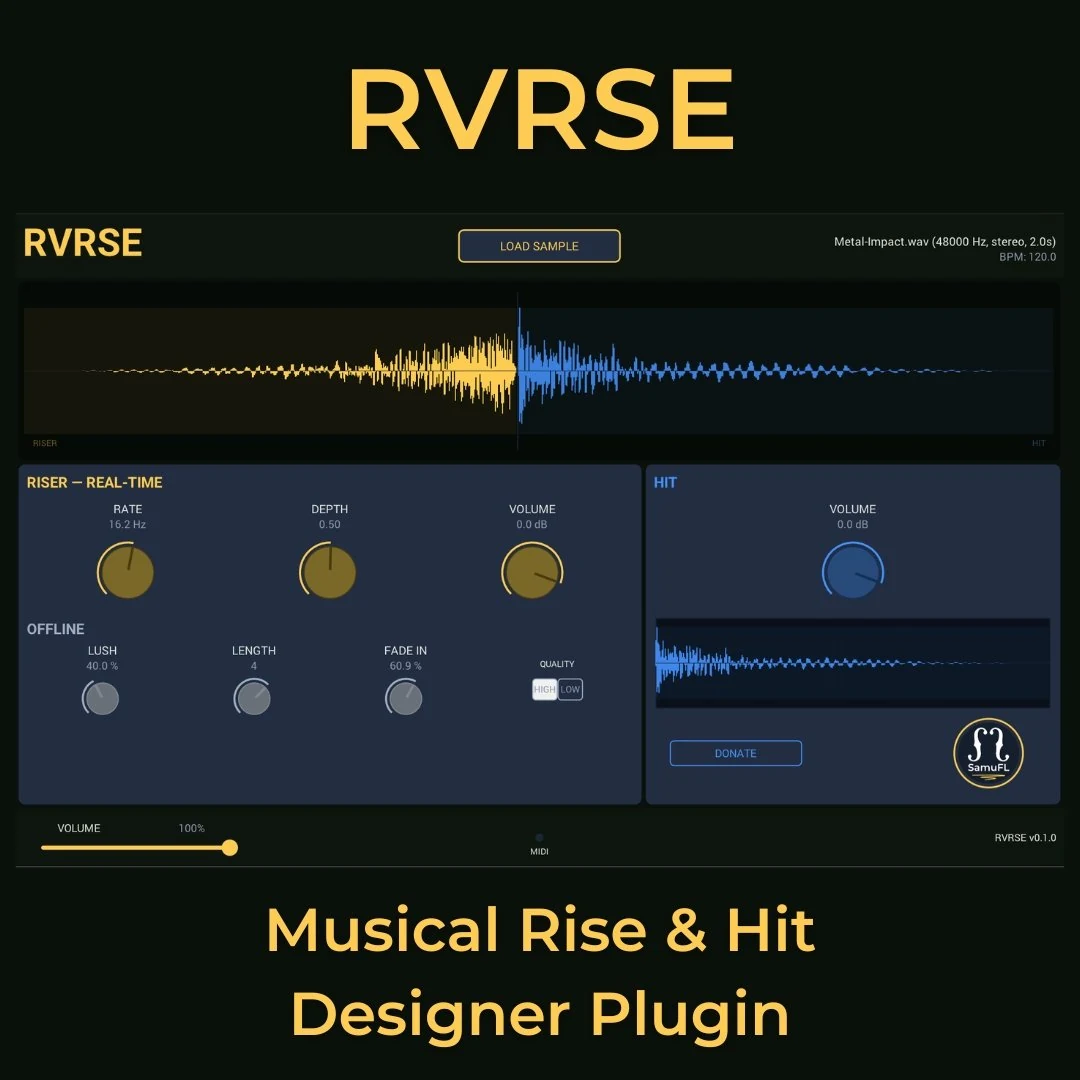
RVRSE is a reverse reverb riser generator from Samuel Ferraz-Leite that turns a single one-shot sample into a tempo-synced build-up and impact. Instead of bouncing audio manually, the plugin loads the hit, stretches it to the chosen musical length, and creates the reversed swell for you in real time.
That workflow is the main reason it feels useful rather than gimmicky. Because the riser is derived from the actual source hit, snares, vocal chops, impacts, and FX one-shots keep more of their original character than they would in a generic noise-based transition tool.
The control set stays intentionally focused: Lush shapes the reverb character, Riser Length steps from quarter-beat gestures to 16-beat builds, Fade In softens the entry, and separate Riser and Hit level knobs help the sweep land cleanly in the mix. A built-in stutter section adds rate and depth controls for more rhythmic EDM-style motion before the final impact.
RVRSE is also unusually transparent for such a niche effect. The public MIT-licensed codebase and the current v1.0.0 release confirm macOS and Windows binaries, with VST3, AU, CLAP, and standalone builds included.
The official store page lists RVRSE at €0 on a pay-what-you-want basis, so it reads as a permanent free utility rather than a timed promo. If you regularly make reverse reverb sweeps by duplicating, rendering, and reversing audio by hand, this plugin removes most of that repetitive setup.
Frequently Asked Questions
Do I need dedicated riser samples to use RVRSE?
No. RVRSE is built around your own one-shot source material, so you feed it a hit, snare, vocal chop, or other short sample and it generates the reverse reverb-style build from that audio.
How long can the riser be?
The Length control covers short quarter-beat gestures up to 16-beat builds. That makes it practical for tiny pickup transitions as well as longer EDM and cinematic tension ramps.
Which formats and systems are included right now?
The current v1.0.0 release ships macOS and Windows builds. The release assets include VST3, AU, CLAP, and standalone versions, with AU available on macOS.
Is RVRSE a permanent free release or a temporary promo?
It appears to be permanently free. The official store page lists the plugin at €0 on a pay-what-you-want basis, and the public GitHub repository is MIT-licensed with downloadable release binaries.
What limitations should I know about before installing it?
The README notes a few deliberate limits in the current build: there is no preset system, no pitch shifting, and the plugin processes one voice at a time. It is a focused transition utility rather than a full general-purpose sampler or reverb workstation.