
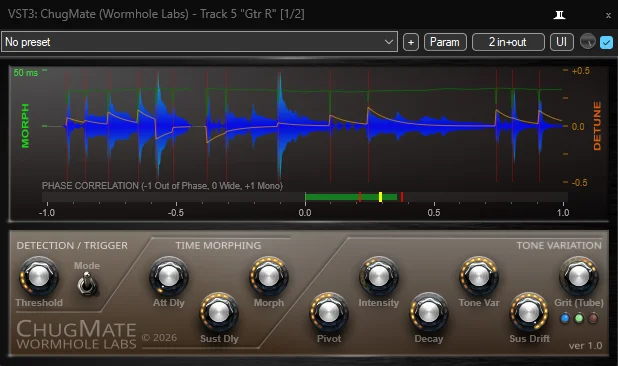
ChugMate
Key Features
- Zero-latency VST3 doubling designed specifically for tight, high-gain rhythm guitar DI tracks
- Transient Splitting keeps pick attacks defined so palm-muted riffs do not smear into the doubled side
- Smart Tail Choke stops the delayed signal when the DI goes quiet to reduce muted-note flam artifacts
- Dynamic Pivot and Intensity respond to playing velocity for a less static doubled performance
- Smart Grit adds phase-aware multiband saturation with Tape and Tube modes for extra width and weight
- Built-in phase correlation meter helps monitor mono compatibility while dialing in the stereo spread
- Simple pre-amp-sim workflow supports dual-amp routing or stereo amp-sim setups for hard-panned guitars
Description
ChugMate is a Windows VST3 guitar doubler from Rob Kor built for tight, heavy rhythm DI tracks before they hit an amp simulator. It creates a second-guitar style layer with zero reported latency, with the workflow aimed at hard-panned metal and rock rhythm parts rather than general-purpose chorus width.
The plugin focuses on problems that standard delay-based doublers often expose on palm-muted riffs. Transient Splitting keeps the pick attack sharp, Smart Tail Choke cuts the delayed side when the DI goes quiet, and Dynamic Pivot plus Intensity make the doubled side react to playing velocity instead of sitting as a static copy.
Rob also includes Smart Grit, a phase-aware multiband saturation stage with Tape and Tube modes for thickening the doubled side. A built-in phase correlation meter gives immediate feedback when the stereo image starts to lean into mono-compatibility trouble.
The important limitation is placement. ChugMate is designed for raw mono DI guitar before an amp sim, then routed to a second amp sim or stereo amp setup and panned against the dry side, so already-amped recordings need reamping first.
Frequently Asked Questions
Where should ChugMate go in the guitar chain?
Place it on a raw mono DI track before the amp simulator. Rob Kor recommends routing the doubled signal to a second amp sim or stereo amp sim and panning the two sides against each other.
Will ChugMate work on recorded amp or cab tracks?
Not as intended. The developer says the processing is designed for DI guitar before amp simulation, so already-amped material needs to be reamped if you want the intended doubling behavior.
Why is ChugMate aimed at heavy rhythm guitar?
Palm-muted riffs expose timing tails and smeared pick attacks more quickly than cleaner parts. ChugMate addresses that with transient handling, tail choking, velocity response, and a phase meter for checking stereo behavior.
Is ChugMate still a beta build?
Yes. The official forum thread presents the current VST3 as a beta build and Rob Kor is asking users to test it with heavy riffs and send feedback.


