
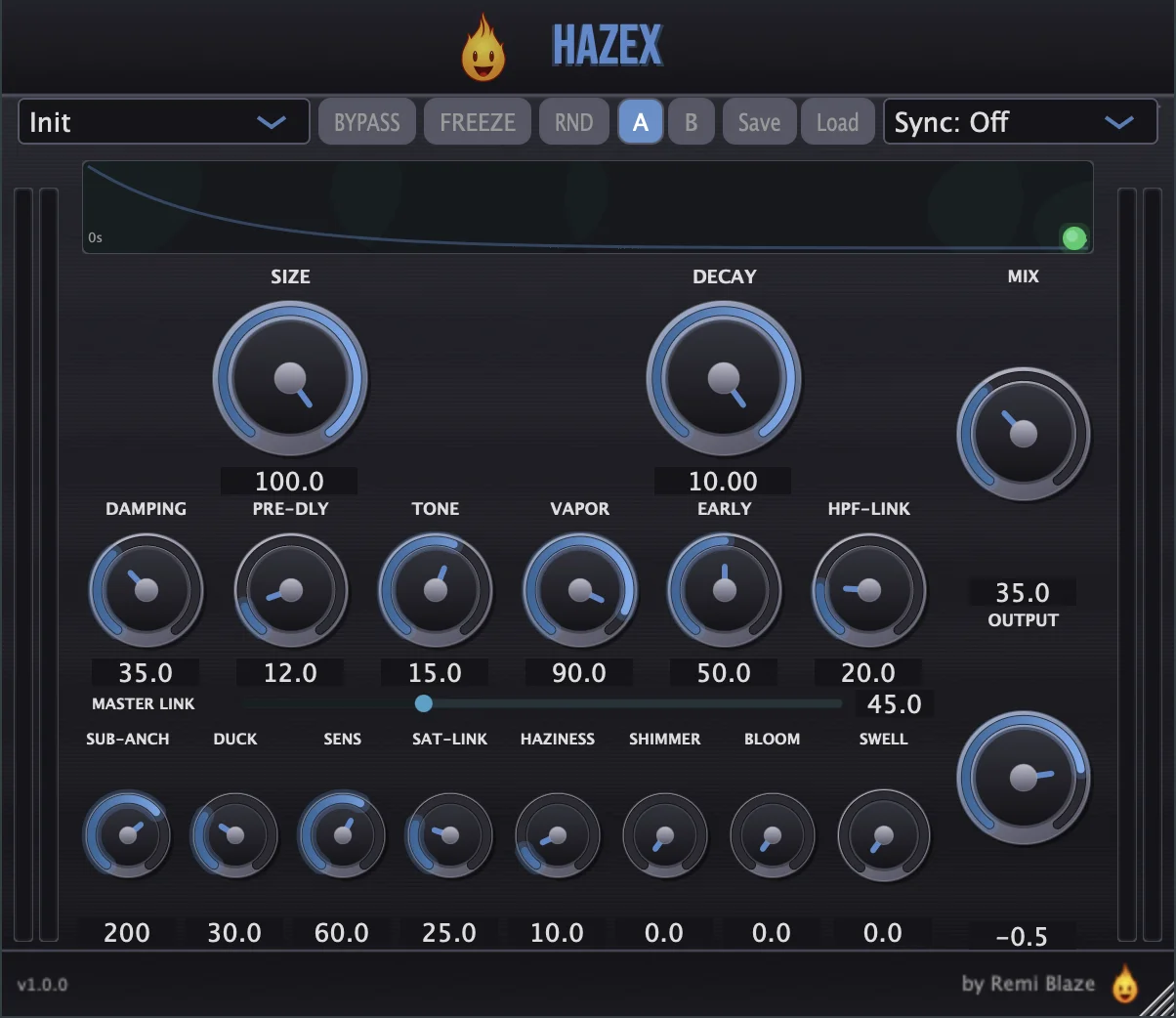
Hazex
Key Features
- An eight-line feedback delay network creates algorithmic stereo rooms, halls, and extended ambient tails.
- Ghost Ducking pulls the reverb back under louder input so attacks retain their definition.
- Sub-Anchor keeps low-frequency reverb mono to help preserve a stable bass foundation.
- Spectral shimmer, reverse bloom, and modulation extend the effect beyond conventional room simulation.
- Preset coverage spans rooms, halls, plates, and more experimental spaces for quick starting points.
- Mac and Windows builds cover modern plug-in hosts as well as standalone use.
Description
Hazex is an algorithmic stereo reverb from Remi Blaze built around an eight-line feedback delay network. It moves from short rooms to long ambient tails while keeping the effect controllable enough for a mix rather than simply flooding the whole signal with space.
Ghost Ducking lowers the reverb tail when the input becomes loud, so transients can remain forward without manual sidechain routing. Its Sub-Anchor crossover also keeps the low-frequency reverb content mono, a practical safeguard when a wide tail would otherwise blur bass and kick information.
Beyond conventional size and decay shaping, Hazex includes spectral shimmer, reverse bloom, modulation, and a collection of room, hall, plate, and creative-space presets. Those options make it useful both for placing a source in a believable space and for producing deliberately animated electronic-music textures.
The current release supports AU, VST3, CLAP, AAX, and standalone use on macOS, plus VST3, CLAP, and standalone use on Windows. Remi Blaze distributes the signed installers through the project’s official GitHub Releases page, where the product is offered under a proprietary freeware license with no trial, watermark, or feature limit.
Frequently Asked Questions
What does Ghost Ducking do in Hazex?
Ghost Ducking reduces the reverb tail beneath louder input. It is designed to let transients and dry-source clarity stay forward while the ambience returns around them.
Why does Hazex keep the low end mono?
The Sub-Anchor crossover keeps low-frequency reverb content mono. This helps avoid a wide reverb tail making bass-focused material less defined.
Can Hazex make creative as well as natural spaces?
Yes. Alongside room, hall, and plate starting points, the plugin provides spectral shimmer, reverse bloom, and modulation for more animated or unusual tails.
Where is the official Hazex installer available?
Remi Blaze distributes the current signed installers through the project’s official GitHub Releases page. The release page is the external download route used here.


