
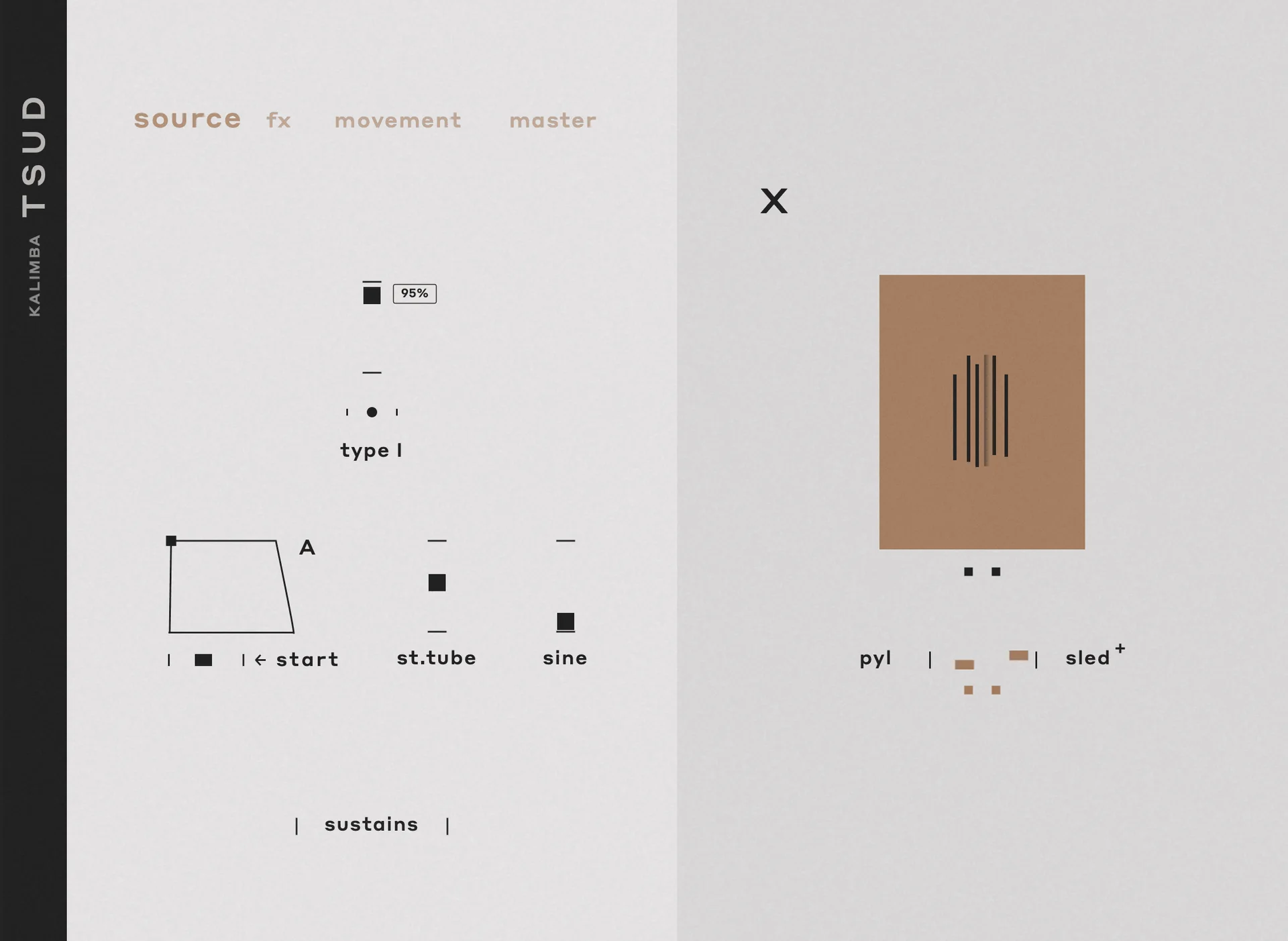
TSUD

Key Features
- Two main sound types let you switch between an exposed close-miked kalimba tone and a filtered tube-preamp version that drifts toward muted electric-piano territory
- X-slider morphs the core recording into four additional derived layers, so one patch can move from intimate thumb-piano detail to softened atmospheric texture
- Extra Sine and st.tube layers add low-end weight and cassette-saturated grit without needing separate layering plugins
- Built-in vibrato, Warm distortion, Shimmer, Echo, Chorus, and Reverb make it easy to push the kalimba into cinematic or lo-fi processing from inside the instrument
- Movement section combines a 12-step sequencer with two LFO modules for rhythmic modulation and evolving hybrid patches
- Deep sampling with up to four velocity layers per note and five round robins gives the instrument more nuance than a lightweight sketch patch
Description
TSUD is a deeply sampled miniature kalimba instrument from Elementary Sounds that turns a humble toy-box thumb piano into a texture-rich plugin for macOS and Windows. Instead of chasing polished concert-kalimba realism, it leans into ribbon-mic detail, finger noise, and a softly worn tone that layers naturally into ambient, downtempo, and melodic electronic work.
The core instrument is built around two contrasting source flavors. Type I preserves the raw recorded signal and its tiny imperfections, while Type II routes the same kalimba through filters and tube preamps so it starts to blur toward a muted electric-piano character.
TSUD also moves well beyond a single dry patch. The X-slider crossfades into four additional layers derived from the original recordings, while the added sine layer, st.tube cassette-and-tube coloration, shimmer, echo, chorus, reverb, 12-step sequencer, and dual LFO movement tools push it from intimate plucks into hazy pads and lo-fi hybrids.
It still reads as a stable freeware release in April 2026, but the access model is email-gated rather than direct. Elementary Sounds keeps the official TSUD page and signup popup live, says future updates stay free once acquired, and BPB plus community reposts continue to present it as an active free release for macOS and Windows in VST3 and AU formats.
Frequently Asked Questions
Does TSUD require Kontakt or any separate sampler?
No. TSUD is distributed as its own plugin instrument rather than as a Kontakt library. The official feature list and BPB coverage both frame it as a VST3 and AU release for macOS and Windows.
What is the difference between Type I and Type II?
Type I is the untreated recorded kalimba, including the finger and tine detail captured by the microphones. Type II runs that same source through filters and tube preamps, which shifts it closer to a muted electric-piano color.
Why is the download so large for a kalimba instrument?
Elementary Sounds says TSUD includes up to four velocity layers per note and five round robins, which adds a lot of sample detail. The official feature list puts the package at 2 GB compressed and 2.4 GB uncompressed.
How do you actually get the free download?
The GET FREE button opens an email signup popup rather than exposing direct public ZIP links. The popup confirmation says the free plugin links are sent to your inbox, so this is a gated but still free distribution flow.
Will TSUD work in Pro Tools?
No. Elementary Sounds explicitly says TSUD is not compatible with Pro Tools or any DAW that does not support VST3 or AU formats. That limitation is repeated on both the official page and the launch coverage.


