
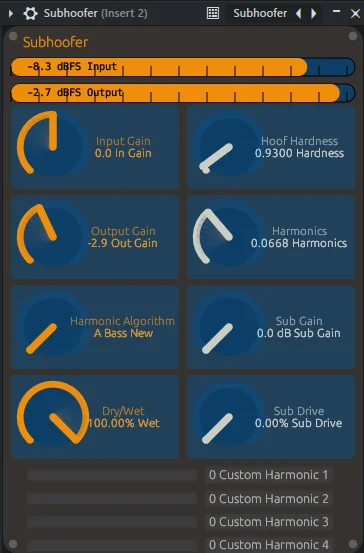
Subhoofer
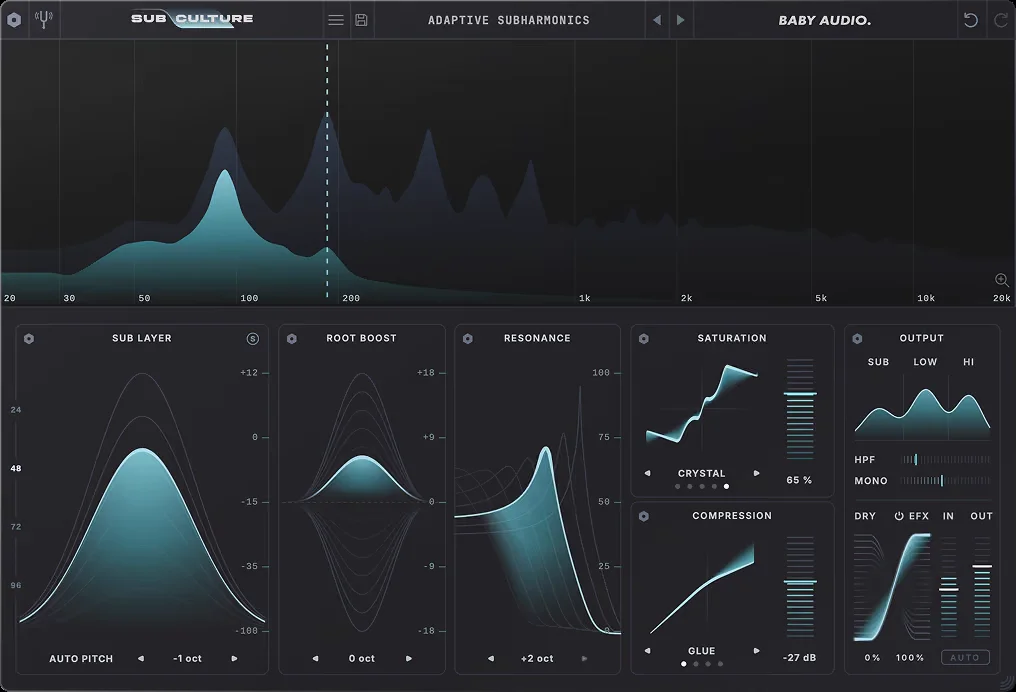
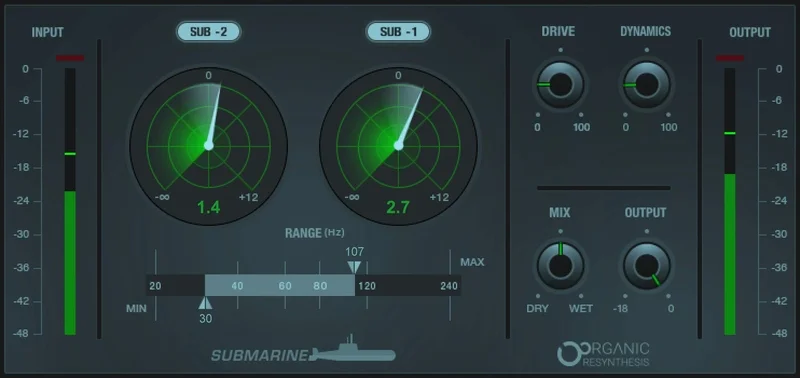
Key Features
- Combines bass-harmonic generation, subharmonic synthesis, and saturation in a single low-end enhancement effect.
- Offers six harmonic modes, including bass-focused algorithms, an eight-harmonic stack, Duro Console-style color, TanH transfer, and a Custom mode.
- Custom harmonic sliders let you build and balance a personalized harmonic profile rather than relying on one fixed curve.
- Hardness shapes the harmonic tone through Ardura’s modified Chebyshev-based control.
- Independent Sub Gain and Sub Drive controls make it possible to blend generated sub content and add subtle extra harmonics to it.
- Input, output, and wet/dry controls support gain-aware blending with the original signal.
- Developer-published VST3 and CLAP builds are available for macOS, Windows, and Linux.
Description
Subhoofer is a bass-enhancement effect that combines generated harmonics, a subharmonic generator, and several saturation approaches in one compact plug-in. It is designed to make bass translate on smaller speakers, extend an existing low end, or add weight to sources such as guitars and vocals.
The main controls cover input and output gain, wet/dry blend, harmonic tone, generated-harmonic level, sub level, and sub drive. Its Hardness control shapes the harmonics, while Sub Drive routes the generated sub signal through the TanH-style transfer for extra color.
Six harmonic-algorithm choices range from Ardura’s bass-focused A Bass options to an eight-harmonic stack, Duro Console-style non-octave emphasis, TanH transfer, and a Custom mode with individual harmonic sliders. That gives it more tonal range than a one-knob bass boost, but it also rewards level-matched listening and moderate settings before reaching for the more extreme modes.
Subhoofer is available as VST3 and CLAP builds for macOS, Windows, and Linux. The project is open-source under GPL-3.0, and its public GitHub Releases page provides the current developer-published builds.
Frequently Asked Questions
What does Subhoofer do?
Subhoofer adds generated bass harmonics and subharmonic content to an incoming signal, with saturation options for additional tone. It is intended for making bass more audible on small playback systems or extending the low end of a source.
Which harmonic modes does Subhoofer include?
The plug-in includes A Bass 3, A Bass 2, 8 Harmonic Stack, Duro Console, TanH Transfer, and Custom modes. Custom exposes harmonic sliders so you can make your own balance instead of choosing only a preset algorithm.
Can Subhoofer be used on more than bass tracks?
Yes. Ardura specifically suggests experimenting with guitars, other instruments, and vocals as well as bass signals. Start with a low wet amount and level-match the output so the added harmonics do not mask the source.
Where can I get current Subhoofer builds?
Use Ardura’s GitHub Releases page, which is the project’s developer-controlled distribution route. The project documents VST3 and CLAP builds for macOS, Windows, and Linux.


