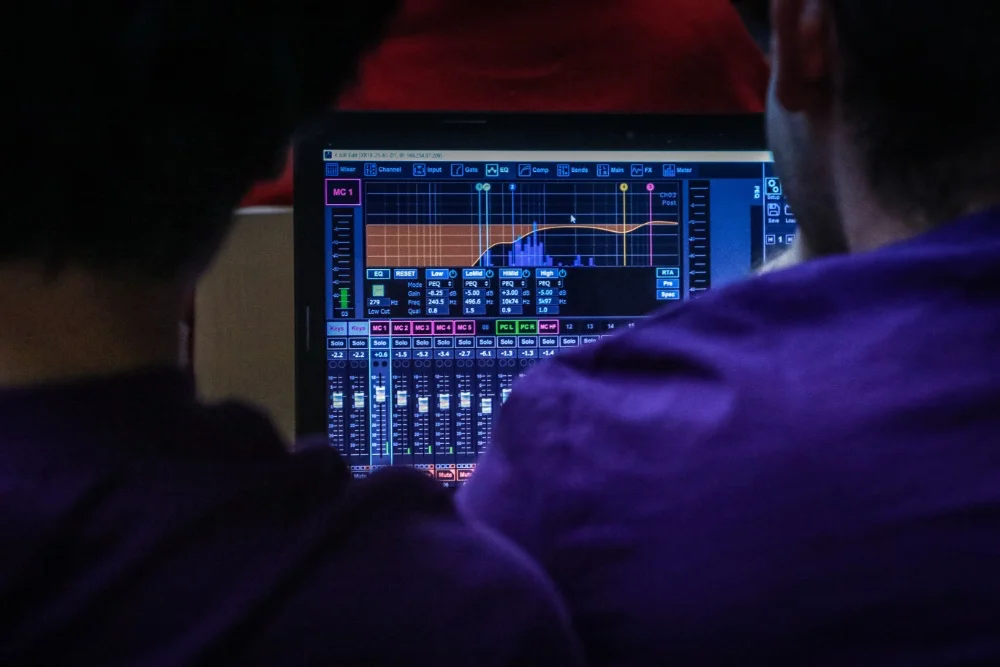
Equalization, or EQ, shapes how a song sounds by balancing its tones. It helps make each instrument stand out or blend smoothly, turning a messy mix into a clear, vibrant song. Think of EQ like a magic paintbrush that can brighten dull sounds or soften harsh ones. People who create music or mix tracks will find this skill a game-changer. Learning how to use EQ opens up a world of sonic possibilities, making your music feel alive and exciting. Keep reading to uncover secrets that can turn any track from ordinary to unforgettable.
Among the various frequency ranges, the low end is particularly important as it lays the foundation for the entire mix.
In this comprehensive guide, we’ll show you exactly how you can EQ the low end of your tracks for a more professional mix.
Understanding Low End Frequencies
The low end frequency range typically spans from 20 Hz to 250 Hz.
This range encompasses the fundamental frequencies of bass-heavy instruments such as kick drums, bass guitars, and low-frequency synthesizers.
The role of low end frequencies varies across different music genres:
- In electronic dance music (EDM), the low end is often emphasized to create a powerful and immersive experience.
- In hip-hop and rap, the low end is crucial for delivering a strong and punchy beat.
- In rock and metal, the low end provides the necessary weight and depth to the overall sound.